

BI & Analytics
From Reactive to Predictive:
Automating Forecast Variances and Exception Management
Read Time : 4 min
Download PDFFor many organizations, forecasting still follows a familiar pattern: teams collect data, build a forecast, and later analyze the differences between expected and actual results. When a variance appears, analysts begin investigating the causes.
The challenge with this approach is timing. By the time teams discover and analyze the variance, the business situation may have already changed. Market conditions shift, operational costs fluctuate, and customer demand evolves faster than traditional reporting cycles.
As a result, forecasting often becomes a reactive process rather than a strategic decision-making tool.
Today, advances in AI and modern Business Intelligence platforms are helping organizations move beyond
this reactive model. Instead of waiting for reports to highlight problems, businesses can continuously monitor
forecasts, automatically detect deviations, and take action earlier.
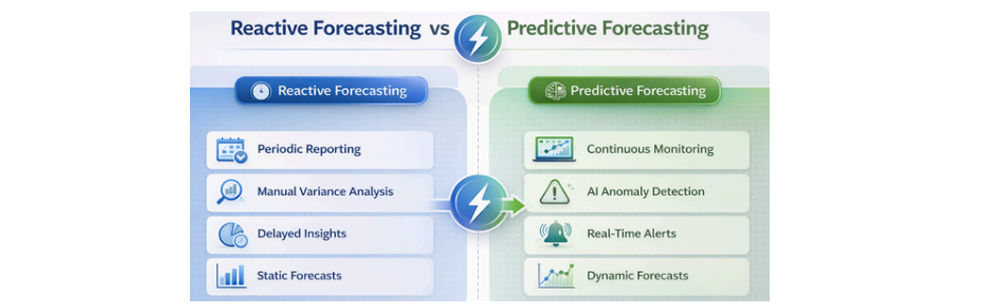
The Limitations of Traditional Forecast Monitoring
In many companies, variance analysis is still a manual and time-consuming process. Analysts generate periodic reports, compare actual results with forecasts, and then investigate discrepancies across different systems.
This workflow introduces several challenges:
- ⚫Variances are often detected too late
- ⚫Analysts spend large amounts of time on manual investigation
- ⚫Forecasts become outdated quickly
- ⚫Opportunities to respond early are frequently missed
When organizations rely solely on periodic reporting, they risk discovering problems only after they have
already impacted performance.
To stay competitive, forecasting needs to evolve from a historical reporting activity into a real-time decision
support capability
Real-Time Forecast Monitoring with AI
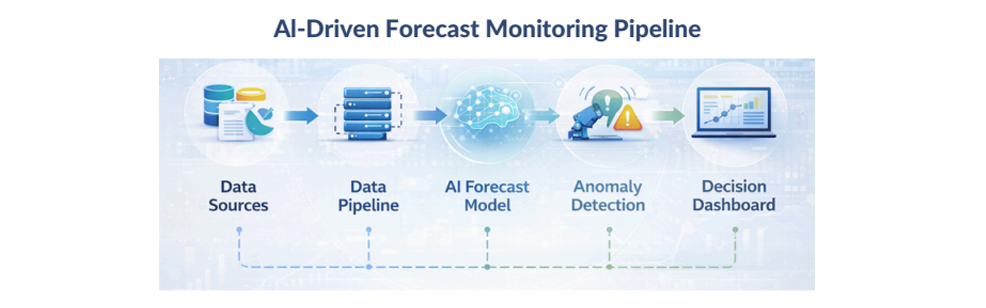
AI-enabled analytics platforms are changing how organizations approach forecasting. Instead of relying on static forecasts created at fixed intervals, modern systems continuously update predictions using incoming data. Machine learning models monitor key business metrics such as revenue, demand, operational costs, or sales pipeline activity.
Whenever the system detects unusual deviations from expected patterns, it automatically flags the anomaly
and alerts the relevant teams.
For example, if a sudden drop in sales begins to appear across certain regions, the system can identify the
deviation immediately rather than weeks later during monthly reviews.
This type of continuous monitoring provides leadership teams with earlier visibility into potential risks or
opportunities
Some of the key benefits include:
- ⚫Continuous comparison between forecasts and real-time data
- ⚫Automatic anomaly detection across critical business metrics
- ⚫Earlier identification of emerging trends or performance issues
- ⚫Reduced dependence on manual reporting and monitoring
With these capabilities, organizations can respond faster and make better-informed decisions.
Faster Root-Cause Analysis
Identifying a variance is only the first step. Understanding why it happened is equally important. Traditionally, analysts must manually explore multiple data sources to determine the cause of a deviation. This process can take hours or even days.
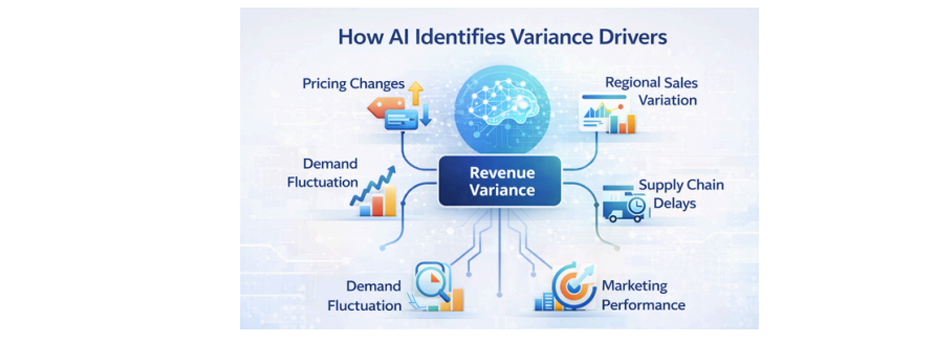
Modern analytics platforms use AI-driven diagnostics to simplify this task. These systems analyze multiple potential drivers simultaneously — including pricing changes, product demand, regional performance, operational costs, or supply chain disruptions. By evaluating these variables in parallel, the platform can quickly highlight the most likely causes of a variance
For example, a revenue drop might be traced to lower demand in specific regions combined with delayed order fulfillment. Instead of manually investigating each factor, the system presents a prioritized explanation within seconds.
This dramatically reduces the time required for variance analysis while improving the accuracy of insights.
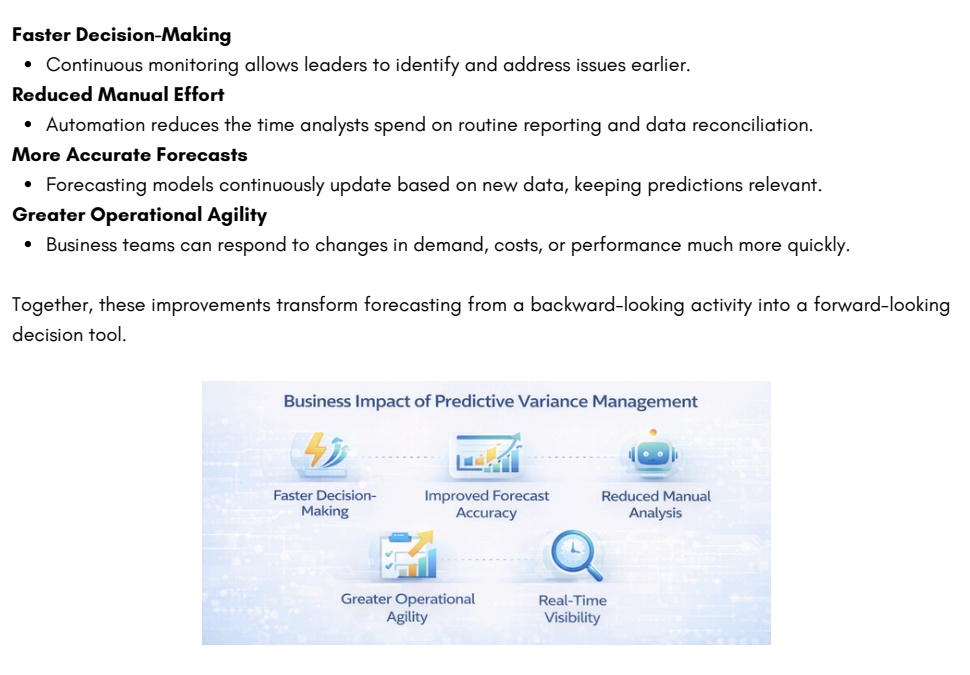
Benefits of Predictive Variance Management
Organizations that adopt predictive forecasting and automated variance monitoring gain several advantages
AION-TECH’s Approach to Predictive BI
At AION-TECH, we help organizations build intelligent analytics environments that combine modern BI platforms with AI-driven capabilities.
Our approach focuses on creating data ecosystems that enable:
- ⚫Real-time performance monitoring
- ⚫Automated anomaly detection
- ⚫Intelligent root-cause diagnostics
- ⚫Predictive forecasting models
- ⚫Data-driven decision support
By embedding intelligence directly into the analytics infrastructure, organizations can detect issues earlier, respond faster, and operate with greater confidence.
The Future of Exception Management
As AI and analytics technologies continue to evolve, forecasting systems are becoming increasingly
autonomous.
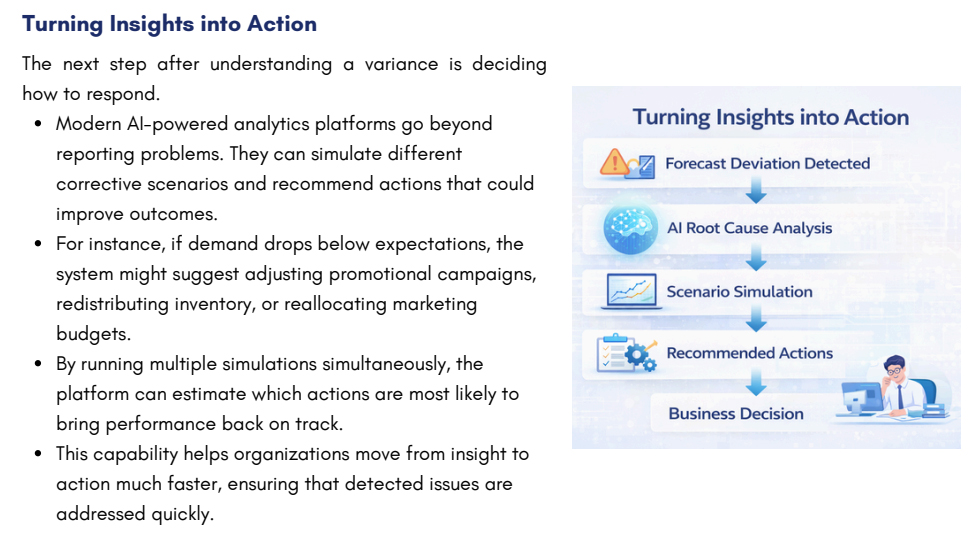
Instead of manually identifying and analyzing exceptions, intelligent platforms will continuously monitor
business performance, detect unusual patterns, diagnose potential causes, and recommend corrective
actions
This shift marks an important transformation in how organizations use Business Intelligence.
Forecasting will no longer focus only on explaining what happened yesterday. It will increasingly help
organizations shape what happens next.
Businesses that embrace predictive variance management will be better positioned to respond to change,
make faster decisions, and maintain a stronger competitive advantage in a rapidly evolving data-driven
economy
Request for Services
Find out more about how we can help your organization navigate its next. Let us know your areas of interest so that we can serve you better